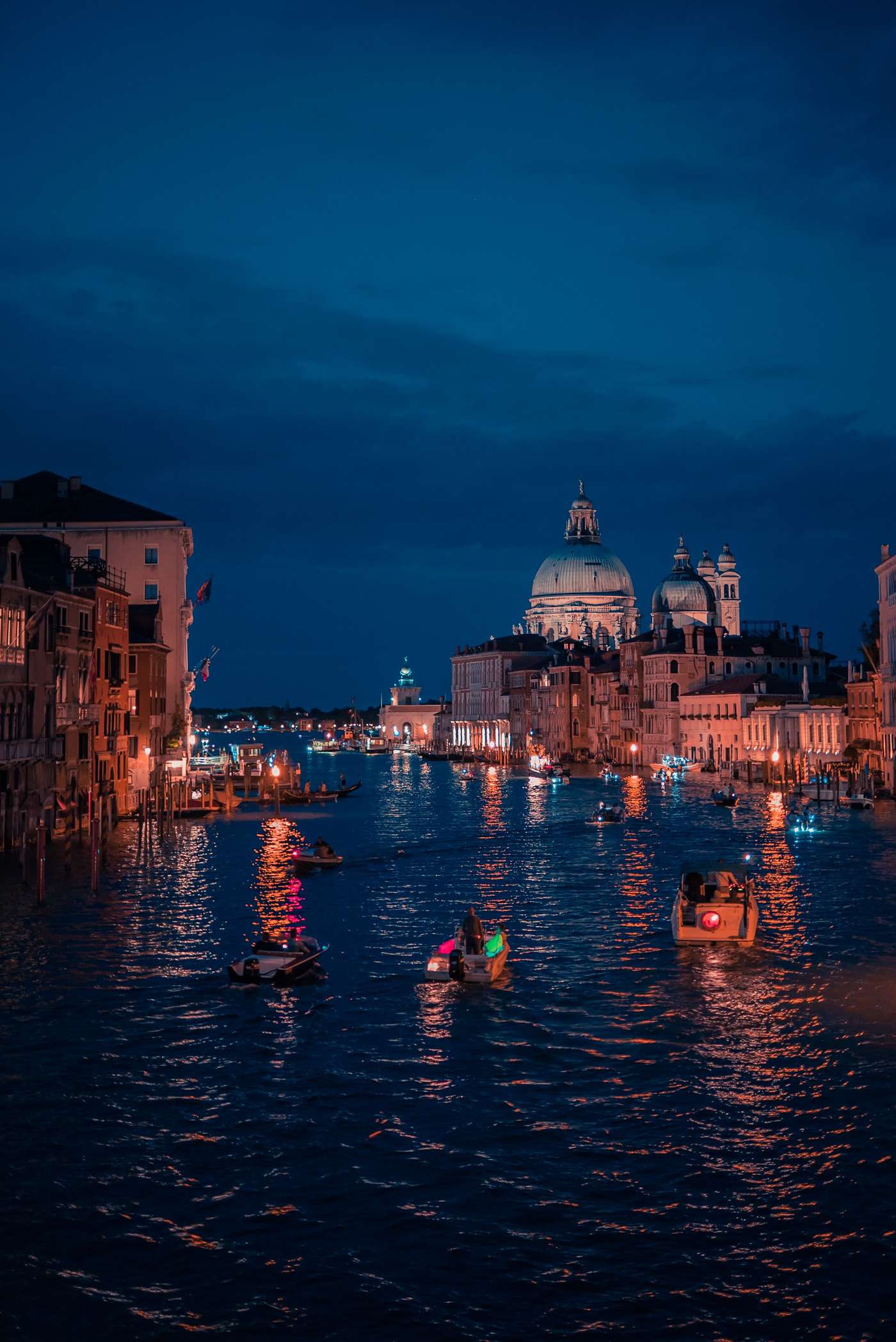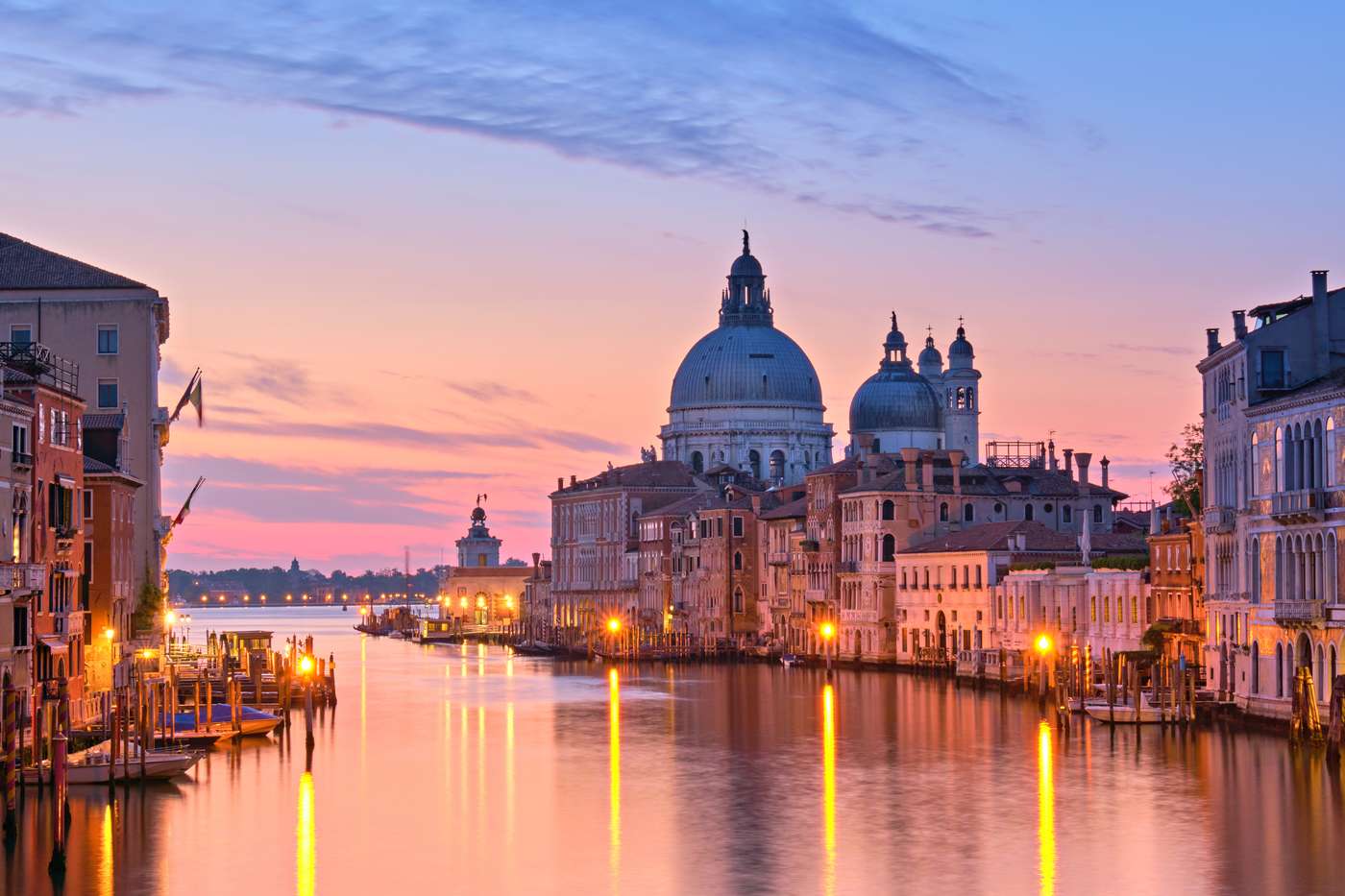
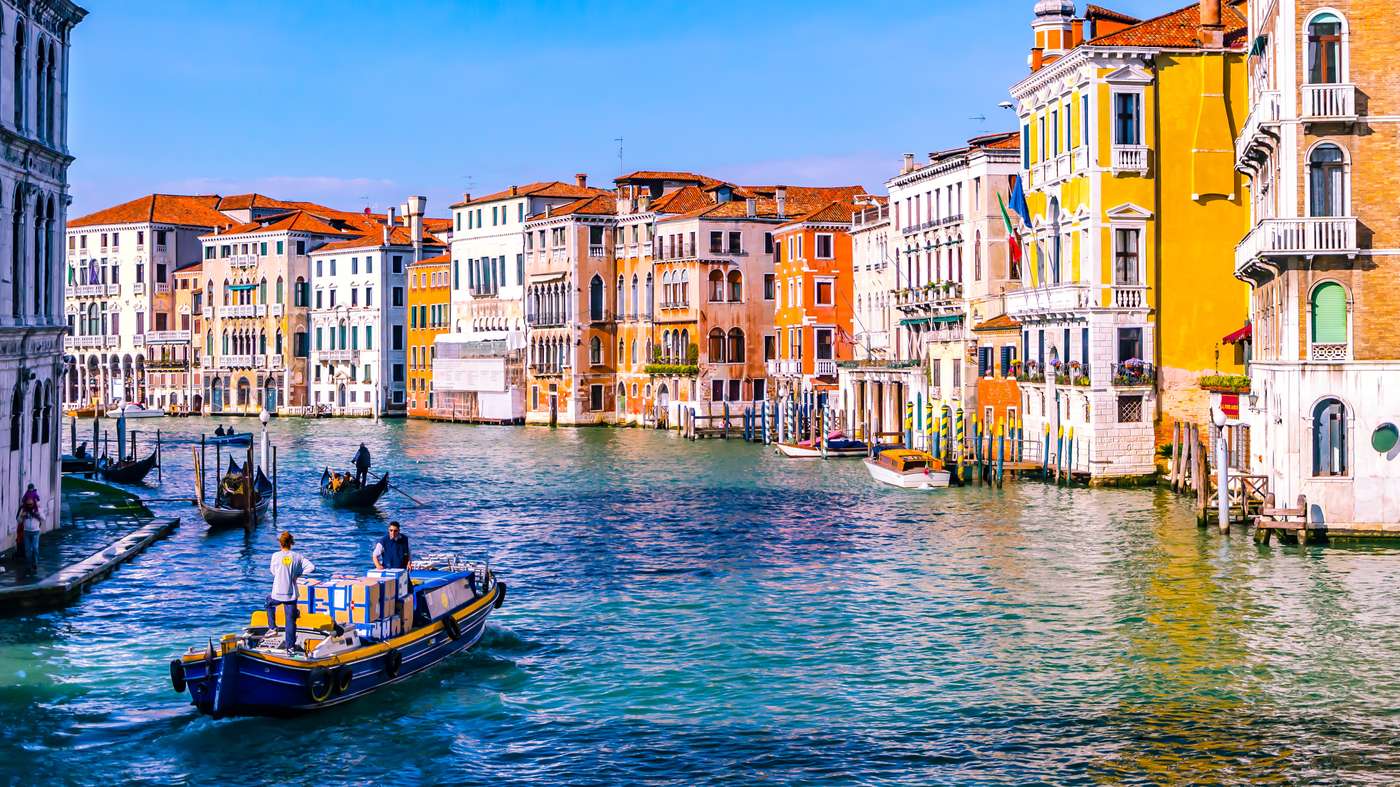
Located in northeastern Italy, Venice is a one-of-a-kind floating city built across canals, where gondolas glide past historic palaces and every corner feels like a postcard.
Holidays to Venice 2026 highlights
Floating city magic – there's literally nowhere else like it, with palaces and churches rising directly from the water
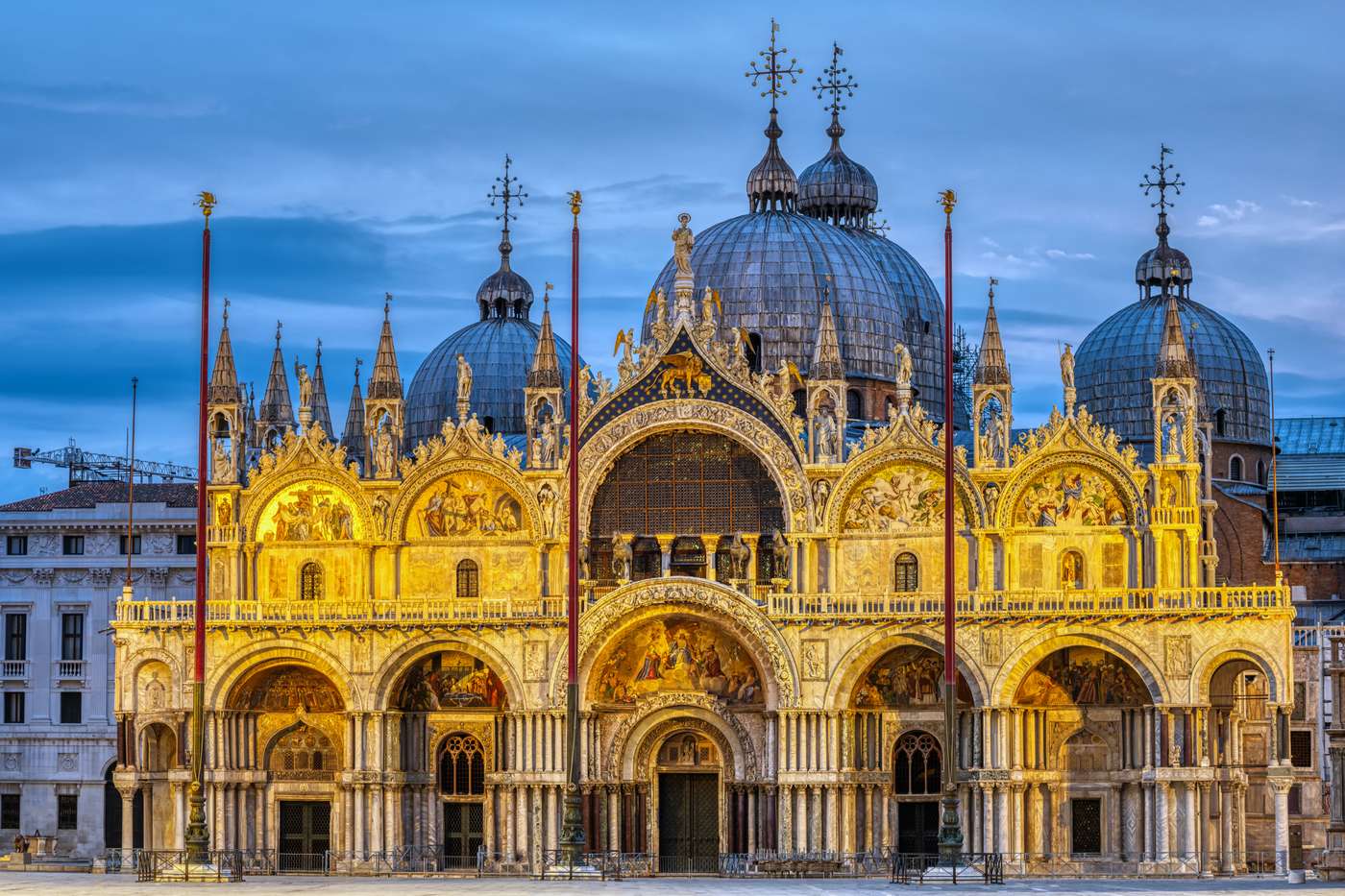
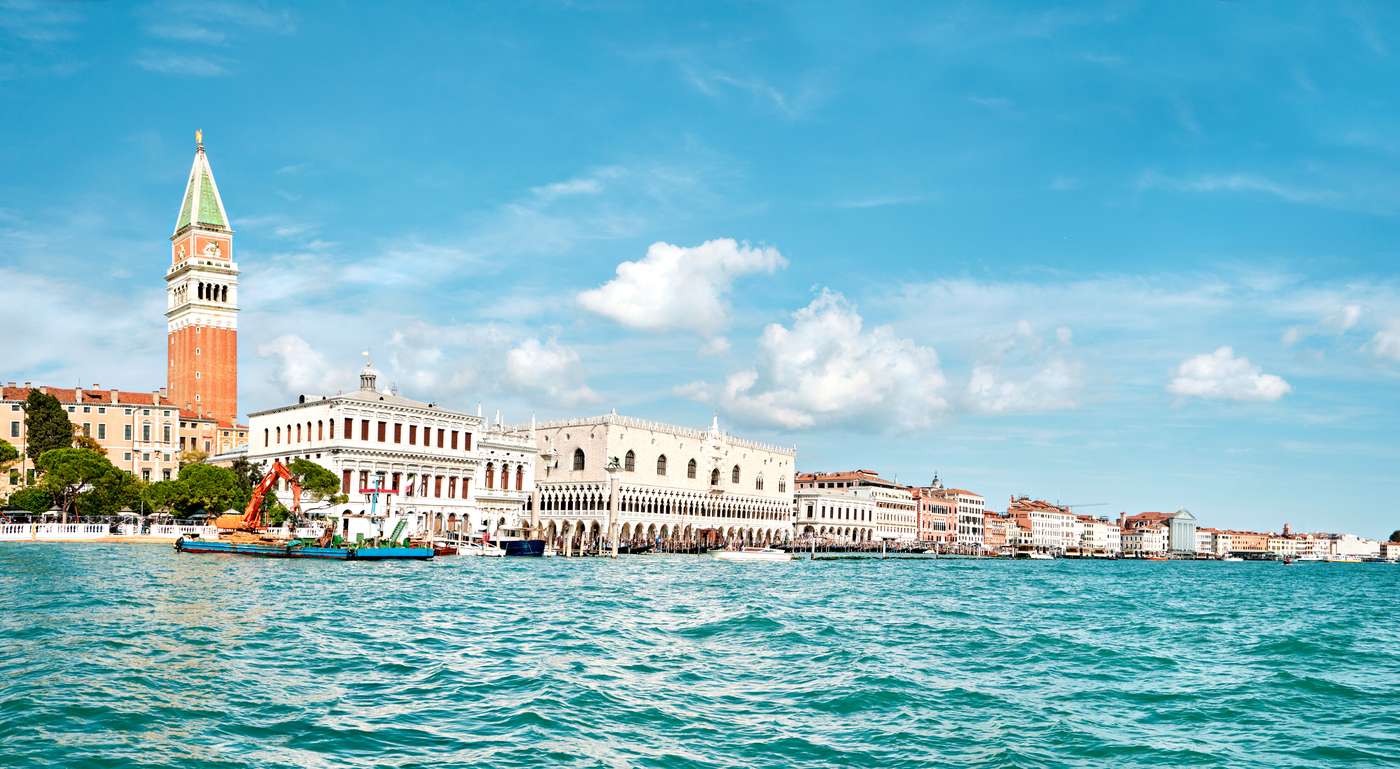
St. Mark's Square – home to the stunning Byzantine basilica and the Gothic Doge's Palace that'll blow your mind
Grand Canal adventures – take a vaporetto ride down this aquatic highway lined with Renaissance palaces
Island hopping – escape the crowds to colourful Burano and glass-making Murano for proper local vibes
Cicchetti culture – Venice's answer to tapas, perfect for a budget-friendly feast with local wine
3 Fun Facts About Venice You Didn’t Know
Built on water – Venice stands on millions of wooden piles driven into the lagoon
No cars allowed – the entire city is pedestrian and boat-only 🚶♂️
Sinking slowly – Venice is gradually sinking, making it even more unique
Local Lingo – Talk Like a Venetian
Knowing a few key Italian phrases can go a long way in Venice, whether you’re ordering food, hopping on a boat, or just being polite.
“Ciao” – hello / goodbye
“Grazie” – thank you
“Per favore” – please
“Tutto bene?” – all good?
“Salute!” – cheers
What Are The Best Places To Visit in Venice?
Venice is essentially one giant, floating gallery, but there are a few "unmissables" that define the city's skyline and history. Here are the heavy hitters to add to your itinerary:
St. Mark’s Square (Piazza San Marco) – the "drawing room of Europe." It’s home to the Basilica and the Campanile (Bell Tower). For the best experience, head here at sunrise before the cruise crowds arrive, or late at night when the orchestras in the cafes start competing.
The Rialto Bridge – the oldest and most iconic bridge crossing the Grand Canal. It’s been standing in its current stone form since 1591. The views from the top are spectacular, and the surrounding market is the best place to feel the city's morning pulse.
The Grand Canal – Venice’s main "boulevard." It’s a four-kilometre S-shaped waterway lined with over 170 buildings dating from the 13th to the 18th century. It'd be kinda weird if you weren't planning on making your way down here at some point... Whether you're on a vaporetto or a gondola, this is the city's greatest show.
The Peggy Guggenheim Collection – located in the Dorsoduro district, this is one of the most important museums for modern art in Italy. It’s housed in an unfinished 18th-century palace right on the water and features works by Picasso, Dalí, and Pollock.
The Bridge of Sighs – this white limestone bridge connects the Doge’s Palace to the New Prison. Legend says its name comes from the sighs of prisoners catching their final glimpse of the beautiful lagoon before being locked away.
The Arsenal of Venice – once the largest industrial complex in Europe, this massive shipyard was responsible for Venice's naval power. Today, its grand gate and lion statues provide a rugged, historic contrast to the delicate palaces of the centre.
Where to Stay on your holidays to Venice
Each area of Venice has its own vibe, so choosing the right neighbourhood can shape your whole trip.
For Couples
San Marco – central, romantic, and close to all the iconic sights
For Families
Cannaregio – quieter, more spacious, and great for a relaxed stay
For Groups
Dorsoduro – lively, artsy, and ideal for bars and nightlife
Top Hotels to stay at on your holidays to Venice
If you are looking for the best hotels to stay at in Venice, the selection below has plenty of choice for various preferences:
Hilton Molino Stucky Venice - located on Giudecca Island, this swanky hotel boasts a rooftop pool with panoramic views, a luxurious spa, and multiple dining options, including the renowned Skyline rooftop bar. With a private shuttle boat to St. Mark’s Square, you’re just minutes away from the heart of Venice.
Carlton on the Grand Canal - situated right on Venice’s most famous waterway, this elegant hotel offers classic Venetian decor, a rooftop lounge, and easy access to major attractions like the Rialto Bridge and St. Mark’s Square. Enjoy a romantic dinner at the on-site restaurant or sip cocktails with a view.
Palazzo Barocci - a historic gem dating back to the 1300s, this hotel combines old-world charm with modern amenities. Located near the Rialto Bridge, it features a beautiful garden, elegant rooms with canal views, and a delightful breakfast buffet to start your day.
Paganelli - just steps from Piazza San Marco, Paganelli offers breathtaking views of the San Marco basin and the Island of San Giorgio. This former Benedictine convent now features elegantly refurbished rooms and a rooftop terrace perfect for evening aperitifs.
Hotel Al Piave - nestled in the Castello district, this family-run hotel is a short stroll from St. Mark’s Square and the Rialto Bridge. With modern amenities, comfortable rooms, and a hearty buffet breakfast, it’s an excellent base for exploring Venice.
Venice Holidays Travel Guide 2026/2027
Things to do in Venice for families
Travelling with kids? Venice has plenty to keep little ones entertained while still feeling magical for adults.
Vaporetto rides – fun and practical for getting around
Mask-making workshops – creative and uniquely Venetian
Island hopping – easy adventures to Burano and Murano
Gelato stops – essential for keeping everyone happy
Things to do in Venice for Couples
If you’re after romance, Venice delivers in every direction, from quiet canals to candlelit dinners.
Gondola rides – a must-do classic
Sunset by the Grand Canal – unbeatable views
Romantic dinners – tucked-away local restaurants
Getting lost together – the best way to explore
Things to do for foodies in Venice
Food is a huge part of the experience in Venice, and there’s plenty to try beyond pizza and pasta.
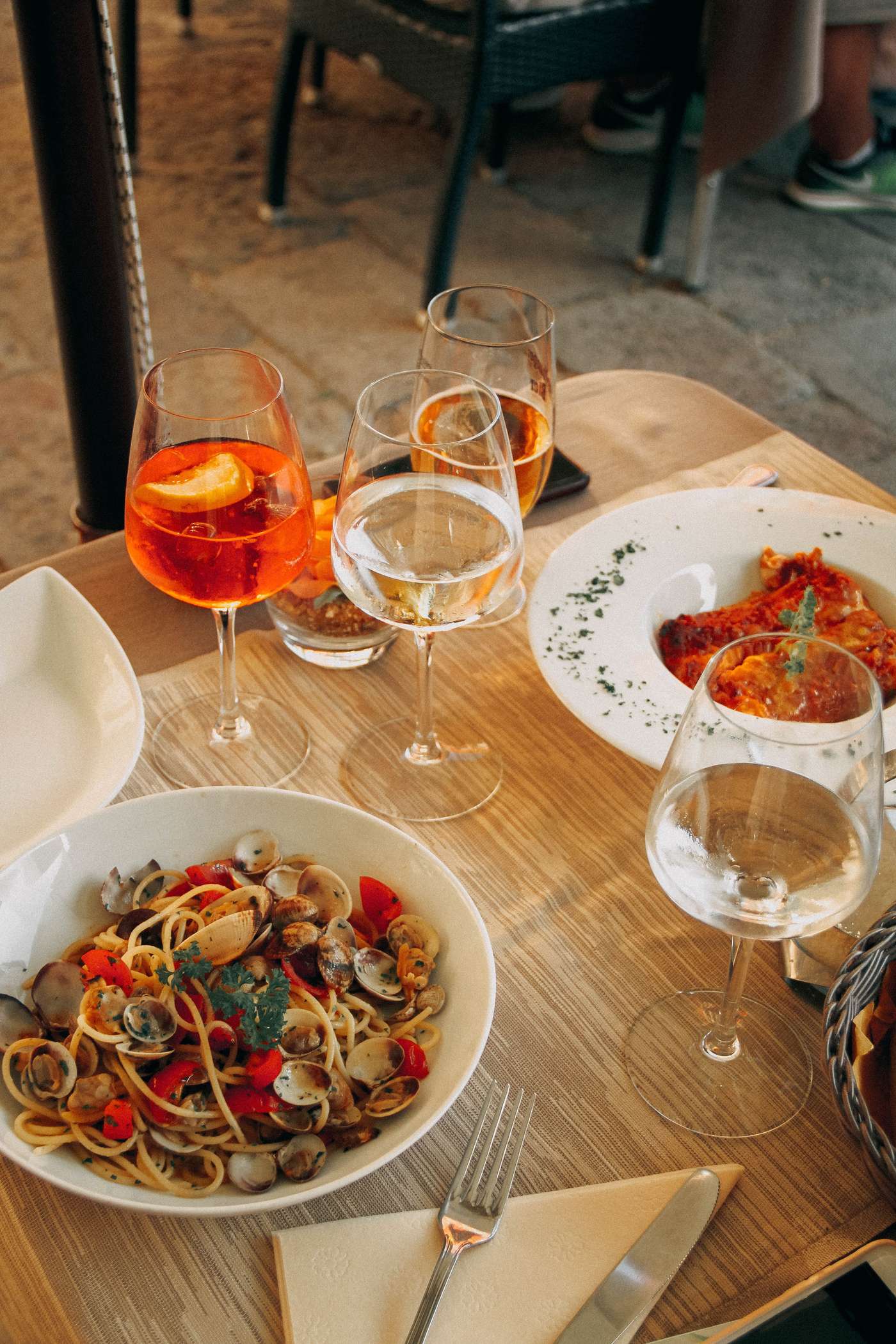
Fresh pasta dishes – simple and full of flavour
Seafood specialities – straight from the lagoon
Aperitivo hour – drinks and snacks before dinner
Gelato tasting – because one stop is never enough
If Venice has got you dreaming of more Italy, check these out:
Popular Venice hotels
More Venice hotelsWeather in Venice
JAN
FEB
MAR
APR
MAY
JUN
JUL
AUG
SEP
OCT
NOV
DEC
For a warm city break to Venice, it’s best to travel between May and September when average temperatures range between 17°C and 23°C. April and October are a little cooler with averages between 12°C and 14°C and from November to March the temperatures drop, ranging from 3°C to 8°C.
View destination on a map
View destination on a map
FAQs
How long does it take to fly to Venice?
How long does it take to fly to Venice?
Direct flights from the UK to Venice take around 2 hours 30 minutes, varying slightly by departure city.
London (Heathrow/Gatwick/Stansted/Luton): around 2 hours 20–30 minutes
Manchester: around 2 hours 40 minutes
Birmingham: around 2 hours 35 minutes
Edinburgh / Glasgow: around 2 hours 50 minutes
Bristol: around 2 hours 25 minutes
Venice is served by two airports. Most UK flights land at Marco Polo Airport (VCE), 12km north of the city. From there you can reach Venice by:
Alilaguna water bus: around 75 minutes, €15 - the most scenic option and drops you directly on the island
Land bus (ATVO or ACTV): to Piazzale Roma in around 25 minutes, €8 - then walk or take a vaporetto to your hotel
Water taxi: around 30 minutes, €110–140 for the whole boat, expensive but spectacular
Treviso Airport (TSF) is used by some Ryanair routes and is around 30km away. A shuttle bus to Venice takes around 70 minutes.
What's the time difference between the UK and Venice?
What's the time difference between the UK and Venice?
Venice is always 1 hour ahead of the UK, year-round.
Italy observes Central European Time (CET, GMT+1) in winter
And Central European Summer Time (CEST, GMT+2) in summer
Italy's clocks change at almost the same time as the UK's, so the 1-hour gap stays consistent throughout the year
In practice: when it's 10am in London, it's 11am in Venice. Worth factoring in for early morning flights, if you land at 9am local time, it's only 8am back home and the city is still quiet.
What currency do they use in Venice?
What currency do they use in Venice?
Venice uses the Euro (€). The pound sterling is not accepted.
Practical money tips:
Cards are widely accepted in hotels, restaurants, and most shops, contactless is standard
Carry some cash for vaporetto tickets at smaller stops, market stalls, and traditional bacari (wine bars) that may be cash-only
Withdraw euros from ATMs on arrival rather than exchanging at the airport, bureau de change rates at airports are poor
Be aware that Venice is one of Italy's most expensive cities, tourist-facing restaurants around St Mark's Square charge significantly more than those a few streets back
Typical costs in Venice:
Espresso standing at a bar: €1–1.50 (sitting at St Mark's Square: up to €8)
Spritz Aperol: €3–5 at a bacaro, €10–15 at a canal-side terrace
Vaporetto single ticket: €9.50 (day pass €25, 48hr pass €35)
Gondola ride: €90 for 30 minutes (official tariff, shared between up to 6 people)
Mid-range restaurant dinner per person: €35–50
Budget cicchetti lunch at a bacaro (small bites + glass of wine): €8–12
What language do they speak in Venice?
What language do they speak in Venice?
Italian is the official language of Venice. The local Venetian dialect (Veneziano) is also spoken among older residents and in traditional settings, though it's distinct from standard Italian and visitors won't need to know it.
English in Venice:
Widely spoken in hotels, tourist attractions, restaurants, and shops throughout the historic centre
Most menus in tourist areas are available in English
Less common in residential neighbourhoods and among older locals
Airport, vaporetto, and museum signage is in both Italian and English
Useful Italian phrases:
Buongiorno / Buonasera - Good morning / Good evening
Per favore - Please
Grazie - Thank you
Il conto, per favore - The bill, please
Un'ombra, per favore - A small glass of wine, please (the classic Venetian bar order)
Dov'è…? - Where is…?
Quanto costa? - How much does it cost?
What's the best area to stay in Venice?
What's the best area to stay in Venice?
Where you stay in Venice shapes the entire trip. The city is divided into six historic districts (sestieri), each with a distinct character.
San Marco - most central, most expensive
Walking distance from the major sights: St Mark's Basilica, the Doge's Palace, the Rialto
The most touristy and most expensive area - restaurants and bars are pricier here
Best for: first-timers who want to be in the heart of everything
Downside: crowded, noisy in peak season, and some streets feel more like theme park than city
Dorsoduro - cultured and residential
Home to the Peggy Guggenheim Collection and the Gallerie dell'Accademia
More neighbourhood feel than San Marco, with students, locals, and independent bars
The Zattere waterfront is one of Venice's best evening walks
Best for: couples, culture lovers, anyone who wants to feel like a local
Cannaregio - local feel, great value
The most authentically Venetian sestiere, stretching north from the train station
The Jewish Ghetto (the world's original ghetto, established 1516) is here
More affordable restaurants and hotels than central Venice
Best for: budget-conscious travellers, those arriving by train, longer stays
San Polo & Santa Croce - lively and central
The Rialto Market is here, one of the great food markets of Europe
Good bacaro (wine bar) scene, particularly around Campo San Polo
Slightly more affordable than San Marco while still being very central
Best for: foodies, those wanting proximity to the Rialto without peak San Marco prices
Castello - quieter and local
The largest sestiere, stretching east from San Marco
Fewer tourists the further east you go, with genuinely residential streets
The Arsenale (Venice's historic shipyard) and the Biennale venues are here
Best for: travellers who want to escape the crowds and see everyday Venetian life
Quick comparison:
Most central: San Marco
Best value: Cannaregio
Most local feel: Castello or Cannaregio
Best for food and wine: San Polo
Best for culture and atmosphere: Dorsoduro
Best for first-timers: San Marco or Dorsoduro
Do I need to pay to enter Venice?
Do I need to pay to enter Venice?
It depends on how you're visiting and when. Venice operates a day-visitor entry fee, officially called the Contributo di Accesso, which applies only to day visitors entering the historic centre on specific high-traffic dates between 3 April and 26 July, during set midday hours.
The key facts:
The fee applies on 60 specific days in 2026, mainly weekends and public holidays, between 3 April and 26 July, between 8:30am and 4:00pm
It costs €5 per person if booked at least four days in advance, rising to €10 for later bookings. It applies to visitors aged 14 and over.
Payment is made on the Venezia Unica website, at Venice-Santa Lucia station, or at tobacconists. Once paid, you receive a QR code that may be checked at access points
If you skip it, fines range from €50 to €300
Who is exempt (but must still register):
Overnight guests staying in registered Venice accommodation, they pay a tourist tax instead. Children under 14 do not need to pay or register. Venice and Veneto residents are also exempt.
Outside the fee dates:
Outside these specific dates, there is no admission fee to enter Venice at all, the charge is not year-round
Bottom line: If you're staying overnight in Venice, you don't pay the entry fee. If you're doing a day trip between April and late July, book your QR code on the Venezia Unica website at least four days ahead to get the lower €5 rate.
What is acqua alta?
What is acqua alta?
Acqua alta means "high water" – when tides and winds combine to flood parts of the city, usually between October and March. St Mark's Square floods first (it's the lowest point). The city sets up raised walkways, and you'll see locals in wellies going about their business. It's actually quite dramatic and memorable – just pack waterproof shoes if visiting in autumn/winter.
Is Venice good for families?
Is Venice good for families?
It can be, but it's better suited to older kids who'll appreciate the history and quirky canals. There are no cars, which is great, but lots of bridges make pushchairs a nightmare. The islands (Murano and Burano) are brilliant for kids, and the Doge's Palace secret itineraries tour is properly exciting for young history buffs. Pack snacks – kid-friendly restaurants can be hard to find.